Should I buy a stronger blower when air becomes weak after a filter change?
First establish what changed in the air path. The replacement filter, its fit and the installed equipment requirements deserve review before a motor upgrade or other parts decision.
Record the symptom
Write down the old and new filter markings if you already have them. Mention whether the new filter was a different size or type and whether the change affected all rooms. Do not remove an internal panel to find a hidden filter.
Note a whistle or rattle where you hear it, but avoid treating the sound as proof of a motor fault. A filter-related timing clue needs confirmation just as an unrelated symptom does.
Plan the access
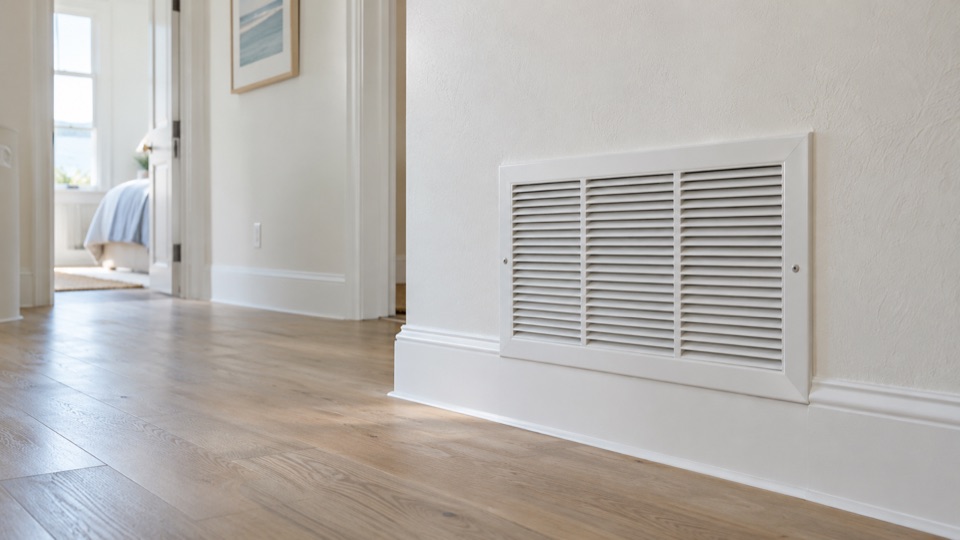
Describe whether the user-serviceable filter is at a room grille or at the cabinet. Follow the equipment instructions for any safely reachable check with the system off. Leave a high or concealed opening to the person equipped to reach it.
Give the Lakewood Park service entrance, which may differ from your mailing location. Tell us if water, debris or a locked gate blocks the route to the unit. Stay on a safe, dry path.
Define the repair decision
Ask which filter the unit needs. Then ask what supports any blower or duct repair. A thicker filter is not always a better fit for the system.
If airflow remains poor with the correct filter arrangement, ask for the next finding rather than a sequence of guessed parts. Confirm whether cabinet access, duct work or finish repair will be included before approving it.
Questions about this repair
Can I remove the filter while waiting for service?
Do not operate without the filter required by the manufacturer. Ask for the correct filter arrangement and keep equipment protection in place.
Carrier heating guidanceU.S. Department of Energywww.stlucie.k12.fl.usSt. Lucie County